


AI Reads Clinical Notes with 99.4% Accuracy for Real-World Research

A clinical-language model scored 99.4% accuracy extracting structured research variables from free-text notes—fast enough to change how real-world evidence is built.
Background
Behind the headline of ai reads clinical notes with 99.4 accuracy for real world research sits a longer arc of trial, error, and iteration. Labs, field sites, and community projects rarely leap from idea to finished tool in a single season. They accumulate small, verifiable improvements—better materials, clearer measurements, kinder workflows—until a pilot finally looks ready for wider attention. Understanding that arc helps hobbyists avoid whiplash. A promising result about this work is an invitation to learn, not a demand to reinvent your entire yard tomorrow. It is also a reminder that universities, cooperatives, and small companies often move knowledge into public view long before big-box shelves change. Evergreen background also includes systems thinking. Soil, water, light, biodiversity, and human habits interact. When a project improves one lever—say moisture retention or regeneration speed—it can ease pressure on others, which is why gardeners feel second-order benefits even when they never touch the original laboratory method.
How It Works
Strip away jargon and most breakthroughs related to this work share a simple pattern: sense a problem clearly, design a response that works with natural processes where possible, then measure whether the response holds up outside the lab. That pattern is as useful in a patio garden as in a research greenhouse. For home-scale readers, 'how it works' often means identifying the transferable principle. If a living mulch harvests humidity, the principle is soil cover plus temperature control. If grafting pairs a hardy root with a tasty top, the principle is modular plant design. If sensors reduce wasted irrigation, the principle is feedback instead of guesswork. Plain-language explanations also reduce mystique around AI and advanced biology. Algorithms and gene tools are powerful, yet they still depend on clean data, human review, and real-world constraints. Celebrating capability works best alongside that humility.
Why It Matters for Hobbyists
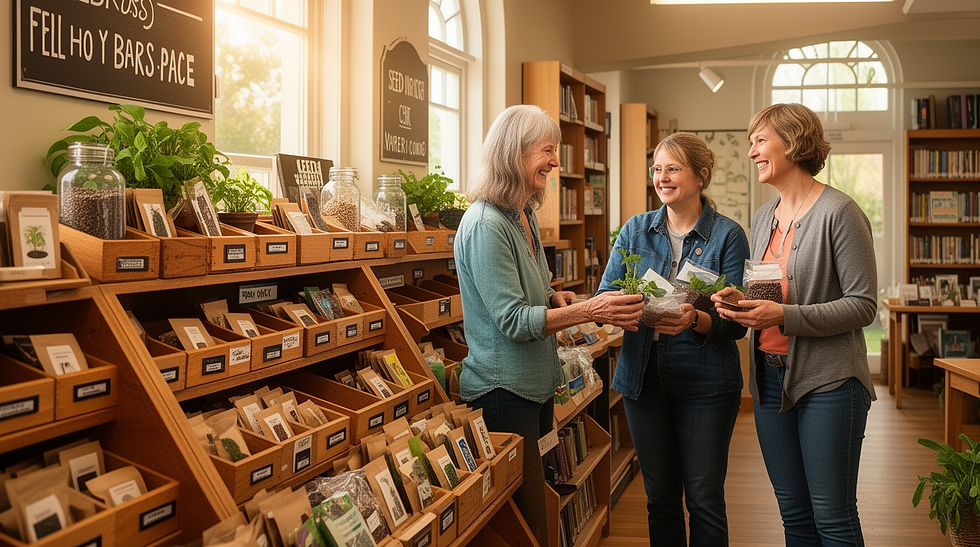
Even when a technology is not yet sold at the garden center, this work can change how you plan beds, choose cultivars, water, and share resources. Ask which stresses you fight most—heat, drought, pests, short seasons—and borrow the matching principle from the research story. Beginners benefit from decision support and small experiments: one grafted tomato, one moisture sensor zone, one shelf of indoor greens, one library seed packet trial. Experts benefit from documentation and community teaching. Both groups benefit when good news stories stay practical. Hobbyists who make, mend, and measure will recognize themselves in restoration crews, maker spaces, and open scientific tools. The same culture that fixes a drip line on Saturday can understand why an artificial leaf or a smarter solar inverter matters for the wider systems that keep gardens watered and lights on.
Limits and Open Questions
Home gardeners and makers often ask what they can do this season. With this work, the near-term steps are usually familiar: observe carefully, keep records, protect soil and water, share tools and knowledge, and stay open to incremental upgrades rather than all-or-nothing overhauls. Limitations deserve equal space beside optimism. Advances around this work can be slowed by cost, supply chains, maintenance needs, training gaps, or environments that differ from research sites. Naming those constraints keeps coverage useful instead of breezy. Community effects amplify individual effort. Neighborhood seed swaps, library maker nights, trail crews, and co-op tool libraries turn solitary experiments around this work into shared learning that lasts longer than a single purchase.
What the Accuracy Claim Means
Ninety-nine point four percent sounds absolute, yet clinical NLP is about careful labeling of variables that researchers care about—diagnoses, medications, outcomes—not about replacing clinicians. The win is speed and consistency when turning messy notes into tables that studies can use, with humans still responsible for design and review.
Why Garden Readers Should Care
Structured evidence habits travel. If hospitals can teach machines to read notes carefully, clubs and co-ops can teach themselves to log watering, pests, and harvests carefully. Better logs make better advice, whether the subject is oncology or tomatoes.
Practical Takeaways
Write observations in plain fields you will actually fill: date, crop, weather, action, result. Share anonymized patterns with your community. Treat AI summaries as drafts that still need a human eye—exactly how clinical teams should treat model output.
What Remains Open
Bias, rare conditions, and shifting note styles can still trip models. The healthy response is continuous validation, not blind trust. Readers can apply the same skepticism to garden apps and soil gadgets: demand calibration and transparent limits.
From Notes to Knowledge
When unstructured text becomes reliable tables, more people can ask better questions of the same data. That is the real product—not a magic reader, but a bridge from narrative to evidence. Hobby communities that write clear notes are already halfway there.
A Shared Ethic
Whether the text is a clinic note or a plot journal, respect privacy, cite sources, and leave a trail others can check. Accuracy without ethics is not progress worth celebrating.
Looking Ahead
If 99.4% holds across diverse health systems, real-world research can move faster without drowning teams in manual chart review. For everyone else, the lesson is durable: clear writing plus careful measurement beats vibes—in medicine and in the garden.
Finally, keep joy on the checklist. Following innovation in food, habitat, and health is not about feeling behind—it is about finding one better habit this season and noticing living systems with sharper attention. Write the date. Write what you tried. Write what happened. That small ritual is how both clinics and community gardens turn stories into knowledge others can use.
When tools promise perfect accuracy, ask who labeled the training data, how edge cases are handled, and how often humans re-check a sample. Those questions protect patients and plants alike.
Building Better Evidence Habits
Real-world research moves faster when notes become structured fields without losing the nuance clinicians meant. The same is true in community science: a garden journal that records cultivar, soil moisture, and pest pressure can feed better advice next season. Accuracy claims should always come with a methods footnote—what was labeled, who checked it, and how often the model is refreshed. Readers can demand that transparency from health tech and from consumer plant apps alike.
If you lead a club or classroom, try a one-month logging challenge. Agree on five fields, keep them short, and review together. You will feel the same friction clinical teams feel, and you will also feel the payoff when patterns emerge that no single memory could hold. That shared discipline is how 99.4% accuracy becomes more than a press-friendly number—it becomes a culture of careful reading, careful writing, and careful checking.
Keep the tone practical. Celebrate tools that save hours of chart review, then ask how patients and gardeners stay in the loop. Progress that skips consent or clarity is not the kind of progress Green Thumb Hobbies wants to cheer. Measure twice, publish once, and leave room for the next revision.
One more habit helps: schedule a monthly audit of whatever you automate. Spot-check a sample of AI extractions or sensor readings the way a lab spot-checks assays. That rhythm keeps tools honest and keeps humans skilled.
That is the whole craft: automate the tedious parts, keep the judgment, and leave a paper trail.


Comments