


Growing Sweet Potatoes in Arizona Containers: A Surprisingly Easy Desert Crop
- Adam Raymond

- Jun 13
- 6 min read
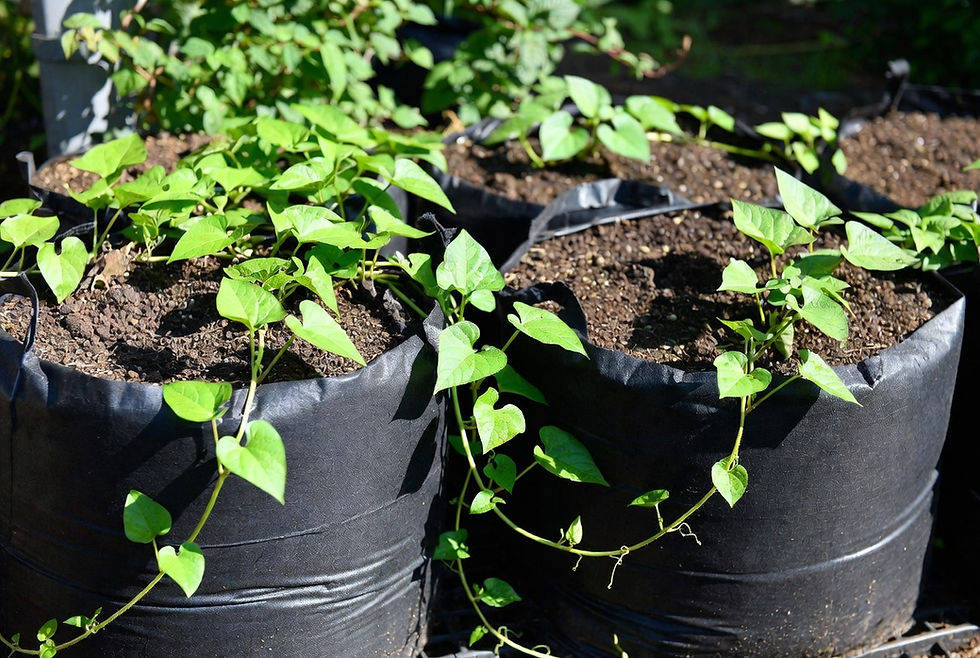
Sweet potatoes are one of the most underrated container vegetables for Arizona gardeners. Most people assume that a tuber crop requires a large in-ground garden bed, but sweet potatoes are uniquely well-suited to container growing — and they absolutely thrive in Arizona's long, hot summers. In fact, sweet potatoes genuinely need heat and a long warm season to develop their large, sweet tubers, which means Arizona's summer is not a problem to work around but a genuine advantage. A single large container planted in May can yield a surprisingly generous harvest of sweet, nutritious tubers in October or November.
Sweet potatoes (Ipomoea batatas) are not related to regular potatoes — they're more closely related to morning glories, and their trailing vines with attractive heart-shaped leaves and occasional purple flowers are actually quite ornamental. Unlike regular potatoes, which prefer cool temperatures, sweet potatoes are tropical plants that evolved in warm, sunny environments. They're drought-tolerant once established, relatively pest-resistant, and the entire plant is edible — the tubers obviously, but also the young leaf tips, which are used as a nutritious cooked green in many Asian cuisines. This guide covers everything you need to know to grow an impressive sweet potato harvest in Arizona containers.
Choosing Sweet Potato Varieties for Arizona Container Growing
Sweet potato varieties are typically classified by flesh color: orange, white, purple, or yellow. For Arizona containers, any variety can succeed, but some perform particularly well in our conditions. Beauregard is the most widely grown commercial variety and is reliably productive in Arizona heat. Georgia Jet is an early-maturing variety (90 days) that's excellent for shorter container seasons. Porto Rico is a compact, bush-type variety that's specifically well-suited to container growing because it produces less vine sprawl.
For adventurous growers, Japanese purple sweet potatoes (like Okinawan or Murasaki) are increasingly popular and grow exceptionally well in Arizona heat. They have a drier, nuttier, less sweet flesh that's extraordinarily nutritious (the purple pigment is a potent antioxidant). White-fleshed varieties like O'Henry have a drier texture similar to regular potatoes and take on savory seasonings beautifully. For a truly ornamental container, Sweet Caroline varieties have attractive bronze or chartreuse foliage and produce tasty tubers while looking gorgeous as a trailing patio plant.
Container Selection: Going Big for Sweet Potato Success
Sweet potatoes need space for their tubers to develop, which means container depth and volume are critical. Use a minimum 15-gallon container, with 20 to 25 gallons being ideal for the best yield. Depth matters as much as width — choose a container at least 12 to 14 inches deep to give tubers room to grow without hitting the container walls (tubers that hit walls can become misshapen and stunted).
Many Arizona sweet potato container growers use grow bags specifically for sweet potato production because the bags can simply be lifted and tipped out at harvest time, making tuber collection easy and minimizing root damage. Large fabric bags in the 20 to 25-gallon range work beautifully. Some gardeners use large black trash bags lined with soil — while not attractive, they're inexpensive and the dark color in Arizona sun can actually help warm the soil for tubers during the cooler fall months as you approach harvest.
Soil Preparation and Planting Sweet Potatoes
Sweet potatoes prefer a loose, well-draining, sandy loam soil that allows tubers to expand without resistance. Heavy, compacted soil stunts tuber development. For container growing, use a mix of 40% premium potting mix, 30% perlite or coarse sand, 20% coco coir, and 10% compost. Avoid adding too much compost or nitrogen-rich amendments — excessive nitrogen produces lush green vines and tiny tubers, just like with green beans.
Sweet potatoes are not grown from seeds (they rarely produce viable seed) or from regular tubers, but from 'slips' — rooted cuttings taken from sprouting sweet potatoes. Purchase slips from a local nursery or garden center in spring, or produce your own by partially submerging a sweet potato in water (using toothpicks to hold it) until it sprouts green shoots, then breaking off rooted slips when they're 4 to 6 inches long. Plant slips in Arizona from mid-April through June — they need soil temperatures above 60°F to establish and at least 90 to 120 frost-free days to develop full-sized tubers.
Plant slips at a 45-degree angle with the lower half buried and several leaf nodes underground. Each buried node can potentially form a tuber. Water thoroughly after planting and provide light shade for the first week while slips establish. Sweet potatoes root quickly in warm Arizona soil and typically show vigorous new growth within 10 to 14 days.
Growing Sweet Potatoes Through Arizona Summer
Once established, sweet potatoes are remarkably self-sufficient through Arizona's summer months. They're drought-tolerant compared to most vegetables — their tuberous roots store water and the plant evolved to handle dry spells. That said, container sweet potatoes need more regular watering than in-ground plants because the container limits their drought reserve. Water when the top 2 inches of soil are dry, which in Arizona summer heat will be every two to three days for a large container. Reduce watering in September and October as tubers approach maturity — this 'curing in the ground' period concentrates sugars and improves flavor.
Sweet potato vines are vigorous and will trail attractively out of the container. Allow them to trail or train them up a trellis — both work fine. The vines are beautiful on patios and balconies, with attractive heart-shaped leaves that provide a lush, tropical look through the summer months. Some vines may root where they touch soil in other nearby containers — you can allow this or redirect the vines. Periodically pinching vine tips encourages the plant to focus energy on tuber development rather than indefinite vine growth.
Fertilizing Arizona Container Sweet Potatoes
Sweet potatoes have modest fertilizer needs compared to most container vegetables — one of the reasons they're so easy to grow successfully. At planting, incorporate a slow-release fertilizer that's relatively low in nitrogen and higher in phosphorus and potassium. Too much nitrogen, as mentioned, drives vine growth at the expense of tubers. About six weeks after planting, apply a liquid fertilizer high in potassium, which directly supports tuber development. After that initial boost, sweet potatoes generally need minimal additional feeding through the rest of their growing season.
Harvesting, Curing, and Storing Arizona Sweet Potatoes
Sweet potatoes are typically ready to harvest 90 to 120 days after planting slips, depending on the variety. In Arizona, potatoes planted in May are usually ready in August through October. Signs of maturity include yellowing and dying back of the vines and the soil surface beginning to crack as tubers push upward. If your vines are still green and healthy-looking, you can wait until a frost threatens (unlikely in the low desert but possible in higher elevations) or harvest at any point after 90 days.
To harvest, tip the container out onto a tarp or into a wheelbarrow. Gently loosen the soil and dig tubers by hand — avoid tools that might pierce the delicate skin. Fresh sweet potatoes need to be cured before eating or storing to develop their full sweetness and to heal any skin abrasions from harvest. Cure them in a warm (80–90°F), humid location for one to two weeks — an Arizona garage or shaded outdoor area in September or October is ideal. After curing, store in a cool, dark, dry location where they'll keep for several months.
Pro Tips for Arizona Container Sweet Potatoes
Don't use potting soil labeled as 'moisture control' — sweet potatoes prefer drier soil, especially as they approach harvest.
The young leaf tips and vine tips of sweet potatoes are delicious sautéed with garlic and olive oil — harvest them regularly for a bonus crop.
Growing sweet potatoes in bags makes harvest dramatically easier — just dump the bag and dig through the soil.
Allow vines to trail decoratively over the edge of your container for a tropical look on the patio.
If you have leftover sweet potatoes after harvest, let them sprout in water to produce slips for next year's planting.
Try Japanese purple sweet potatoes for a nutrient-dense, visually stunning variety that performs exceptionally well in Arizona heat.
Sweet potato pie from homegrown tubers made from fresh-cured potatoes is an unforgettable experience — absolutely worth the garden space.
Sweet potatoes are one of Arizona's best-kept container garden secrets. They're productive, nutritious, beautiful as trailing ornamental vines, relatively low-maintenance, and deeply satisfying to harvest — nothing quite compares to tipping out a large container and discovering a tangle of beautiful sweet potatoes in your own Arizona backyard. Give them a large container, warm weather, and a patient 90 to 120 days, and they will reward you with one of the most delicious and nutritious harvests in the garden.


Comments