


Growing Mustard Greens in Arizona: Plant, Harvest and Cook Spicy Fall Greens

If you want a fall crop that grows fast, laughs off chilly nights, and actually tastes like something, plant mustard greens. These leafy brassicas bring a peppery, horseradish-like kick that mellows as soon as they hit a hot pan. They are also one of the easiest greens to grow in an Arizona winter garden. A packet of seed costs a couple of dollars, the first baby leaves are ready in about three weeks, and a single short row can keep a family in greens from November into spring.
Below I cover when to plant in the low desert and the high country, the varieties I think are worth growing, soil prep, watering, the pests that show up in our fall gardens, how to harvest so plants keep producing, and my favorite simple ways to cook a big pile of spicy greens.
Why Mustard Greens Belong in Your Arizona Fall Garden
Mustard greens (mostly Brassica juncea) are cool-season plants. They grow best when daytime temperatures sit somewhere in the 50s to 70s, and that describes a low desert winter almost perfectly. Light frost does not bother them, and a few cold nights actually sweeten the leaves a little, because the plant turns some of its starches into sugars as a kind of natural antifreeze.
What mustard does not like is heat. When temperatures climb into the 80s and 90s, plants bolt, sending up tall flower stalks, and the leaves turn tough and aggressively hot. That is the whole trick to growing mustard here: plant so the plants do most of their growing in cool weather, and enjoy them before spring heat kicks in.
The other reason I love this crop is speed. Baby mustard leaves can be cut in roughly 21 to 30 days. Full-size leaves are usually ready in about 40 to 50 days. If you are already growing kale (our full guide is here: https://www.greenthumbhobbies.com/post/kale-arizona) or bok choy (https://www.greenthumbhobbies.com/post/bok-choy-arizona), mustard fits right alongside them. It uses the same soil, the same water schedule, and the same pest plan.
When to Plant: Low Desert vs. High Country
Low desert (Phoenix, Tucson, Yuma, and areas below about 3,000 feet). Direct sow from about mid-September through February. October and November plantings are the sweet spot, because the plants grow through our mildest weather. If you sow in early September while soil is still very warm, give seedlings some afternoon shade. Late winter sowings work, but expect them to bolt sooner as March and April warm up.
Mid elevations (Prescott, Payson, Sierra Vista, and areas around 3,000 to 5,500 feet). You can often get two crops. Sow in early spring as soon as the soil can be worked, and again in late summer so plants mature in the cool weeks of fall. A row cover stretches the fall crop well past the first frosts.
High country (Flagstaff, the White Mountains, and areas above about 6,000 feet). Sow in spring after the hardest freezes and again in mid to late summer for a fall harvest. Mustard handles light frost, so it often keeps producing after warm-season crops are done.
A good rule anywhere in Arizona: count back from your first hard heat (or your first hard freeze in the mountains) and make sure your plants get at least five to six weeks of growing in cool weather.
Mustard Varieties Worth Growing
Seed catalogs list a lot of mustards. Here are the ones I think give Arizona gardeners the best results.
Southern Giant Curled. The classic Southern cooking green. Big, frilly, bright green leaves with a strong bite. Productive and slow to bolt for a mustard.
Florida Broadleaf. Wide, flat, mild leaves that are easy to wash and great in soups and braises. A good choice if your family is new to mustard.
Red Giant. Big purple-red leaves with a green midrib, and some serious heat. Gorgeous in the garden and makes a nice splash of color in a salad mix when picked young.
Green Wave. Deeply curled, very spicy, and known for holding longer before bolting. Good for a late winter sowing.
Ruby Streaks or Golden Frills. Lacy, feathery mustards that look fantastic in containers and are best as baby greens.
If you want to try something close to mustard but milder, look for mizuna or Tendergreen (often sold as mustard spinach). They are cousins in the Brassica rapa group, and they grow the same way.
Prepping the Bed
Mustard greens are not fussy, but they grow fastest in loose soil with plenty of organic matter. Most native Arizona soil is alkaline, low in organic matter, and either sandy or packed hard. Fixing that is easy.
Loosen the bed 8 to 10 inches deep and work in 2 to 3 inches of finished compost. Because you are growing leaves, mustard appreciates a little more nitrogen than root crops do. A balanced organic vegetable fertilizer mixed in at planting, followed by a light side dressing or a dose of fish emulsion about four weeks later, keeps leaves big and tender. If leaves start looking pale yellow-green across the whole plant, that is usually a nitrogen hint.
Pick a spot with at least 6 hours of direct winter sun. Raised beds are ideal, and mustard is very happy in containers too. A pot at least 8 inches deep and 12 inches wide will grow two or three full-size plants, or a whole patch of baby greens.
Sowing and Thinning
Mustard seed is tiny and round. Sow it about a quarter inch deep, either in rows 12 to 18 inches apart or scattered across a wide bed. Pat the soil down and keep the top inch evenly moist until seedlings come up, which usually takes about 4 to 10 days depending on soil temperature.
Thinning is where many people go wrong. Crowded mustard stays small, stresses out, and bolts early. Here is the simple approach I use:
When seedlings have two or three true leaves, thin to about 3 to 4 inches apart.
A couple of weeks later, thin again to 8 to 12 inches apart for full-size plants (closer for baby-leaf types).
Eat every thinning. Mustard microgreens and baby leaves are delicious in salads and sandwiches.
For a steady supply all winter, sow a short new row every two to three weeks instead of one big planting. Succession sowing means you always have young, tender plants coming on when the oldest ones get tough.
Watering Through an Arizona Winter
Steady moisture is the secret to tender, mild mustard. Leaves that grow under drought stress get tougher and much hotter. Aim to keep the top couple of inches of soil evenly moist, never soggy.
In October, when days are still warm, that may mean watering every other day in a raised bed. By December and January, two or three times a week is often plenty, and some weeks rain does the job for you. Drip lines or soaker hoses under a layer of mulch work beautifully. Watering in the morning helps leaves dry quickly and reduces fungal problems. Containers dry faster than beds, so check them with your finger before you water.
Pests and Problems to Watch For
Mustard is tough, but it is still a brassica, and Arizona brassica pests know where to find it.
Bagrada bugs. Small black and orange shield-shaped bugs that cause white, blotchy, scorched-looking spots. They are a serious fall pest in the low desert and can wipe out seedlings. Start early: hand-pick or vacuum them in the morning, cover new sowings with row cover, and clean up weedy mustard relatives around the yard.
Cabbage loopers and imported cabbageworms. Green caterpillars that chew ragged holes. Pick them off, and use row cover to keep the white butterflies from laying eggs. Bt (Bacillus thuringiensis) is an organic option that targets caterpillars.
Aphids. Gray-green clusters on the undersides of leaves, especially in late winter. A hard spray of water often handles them, and insecticidal soap helps with heavy outbreaks.
Flea beetles. Tiny jumping beetles that leave pinholes in young leaves. Seedlings usually outgrow them once weather cools.
Row cover is honestly the single best tool for a fall brassica bed in Arizona. If you do not have hoops yet, here is our walkthrough on building simple ones: https://www.greenthumbhobbies.com/post/diy-row-cover-hoops
Bolting is the other common problem. Once you see a central stalk shooting up with buds, the leaves get hotter and tougher quickly. Harvest everything you can, then either pull the plant or let it flower for the bees. Mustard flowers are bright yellow, edible, and a nice early food for pollinators.
Harvesting So Plants Keep Producing
You can harvest mustard in three ways, and I use all of them over a season.
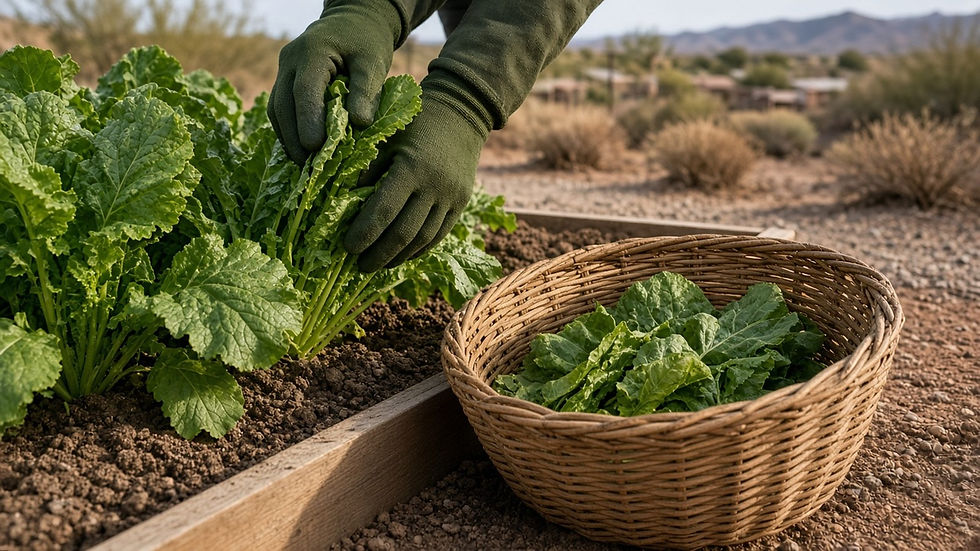
Baby greens. Cut leaves when they are 3 to 4 inches long, about three to four weeks after sowing. Snip a couple of inches above the soil and many plants will regrow for another cutting or two.
Cut-and-come-again. Once plants have six or more leaves, pick the outer, older leaves and leave the center growing point alone. Take no more than a third of the plant at a time. A healthy plant keeps pushing out new leaves for weeks.
Whole-plant harvest. For a big batch, cut the entire plant at the base. This is a good move when hot weather is coming and plants are about to bolt anyway.
Pick in the cool of the morning when leaves are crisp. Rinse well, because the frilly types love to trap soil, then spin dry and store in a bag with a paper towel in the fridge. Mustard keeps about a week, though it is best within a few days.

Cooking Spicy Fall Greens
Raw mustard leaves are bold. Heat tames them fast, which is why most traditional recipes cook them. Here are the ways I use them most.
Quick garlic saute. Warm olive oil, add sliced garlic and a pinch of red pepper flakes, then toss in chopped mustard greens. Cook just until wilted, about two to three minutes, and finish with a squeeze of lemon and a little salt. This is my everyday side dish all winter.
Southern-style braise. Simmer greens slowly with onion, garlic, a smoked turkey wing or a little bacon, and some broth until silky. A splash of vinegar at the end brightens everything. Mixing mustard with collards or turnip greens (our turnip guide is here: https://www.greenthumbhobbies.com/post/turnips-arizona) balances the heat nicely.
Soups and beans. Stir a few handfuls of chopped greens into white bean soup, lentils, or minestrone during the last five minutes. They wilt right in and add color and flavor.
Baby greens raw. Young leaves mixed into salads with arugula (https://www.greenthumbhobbies.com/post/arugula-arizona) and lettuce add a pleasant spark without being overwhelming.

Wrapping Up
Mustard greens are one of those crops that make winter gardening in Arizona feel like cheating. They sprout fast, grow in a few square feet, shrug off cold nights, and hand you something tasty to cook every week. Try one bold variety and one mild one this year, sow a few short rows a couple of weeks apart, and keep that row cover handy for the bagrada bugs.
If you want to round out the bed, spinach (https://www.greenthumbhobbies.com/post/spinach-arizona) and lettuce make great neighbors, and together they turn a small raised bed into a winter salad bar. Happy growing, and enjoy the spice.


Comments