


Cool Morning at Montezuma Castle National Monument: Cliff Dwellings Along Wet Beaver Creek

I go to Montezuma Castle when I want a morning that is not another lap around the garden. It sits near Camp Verde, above Wet Beaver Creek, and in October the light is soft if you get there early. The thing in the cliff is a Sinagua dwelling, rooms of stone and mud stacked in a limestone alcove. It is not a natural arch, not a tunnel, and not a bridge. You look up at it from the trail. You do not climb into it. That is the whole visit, and it is enough.
What You Are Actually Looking At
The National Park Service calls Montezuma Castle a 20-room high-rise set into a towering limestone cliff. The alcove is about 90 feet up, high enough that floodwater on the creek stayed below the floors. The name is a mistake that stuck. The people who built and lived here were Sinagua, part of a long Verde Valley story, not Aztec, and not connected to the Montezuma the Spanish wrote about. NPS marks the monument as established on December 8, 1906, one of the early national monuments set aside to protect Native American places.
From the valley the rooms read as one building. Up close, in the photographs and in the little museum film, you see doorways, ceilings, and storage tucked into the rock. More of the main dwelling is original than replaced. The alcove itself is why. Rain and sun hit the cliff face and mostly miss the rooms. I keep that in my head when someone points and says “the arch.” There is no arch to walk under. There is a recess in the limestone, and a house built into it.
The park’s own overview is here: https://www.nps.gov/moca/index.htm
A Cool Morning, On Purpose
October in the Verde Valley can be pleasant at breakfast and sharp by noon. I treat the monument like a garden chore I want done before the heat: arrive near opening, walk once, sit a minute, leave. The hours page lists the monument open every day from 9:00 a.m. to 4:45 p.m. The same page says the gate is a mile from the visitor center and closes at 4:45 p.m., and that parking on the road or in front of the gate is not allowed. Thanksgiving Day, Christmas Day, and New Year’s Day are listed as closed, and the page notes the park may close early on December 24, December 31, and the day before Thanksgiving. Hours move. I check https://www.nps.gov/moca/planyourvisit/hours.htm the night before instead of trusting a screenshot.
“Cool” is relative. The trail is short and partly shaded, and I still bring water. A hat stays on. The creek looks inviting and is not a swimming beach I came for. The visit is the walk and the view.
Fees, Passes, and the Well
Entrance is a per-person fee, not a per-car fee. The fees page lists a standard pass at $10 for each adult age 16 and over. Children 15 and under are free. That seven-day pass also covers Tuzigoot National Monument. Montezuma Well, the separate unit of this same monument, does not charge an entrance fee.
If I am only coming once, the $10 pass is the simple choice. A park annual pass is listed at $35 and covers Montezuma Castle and Tuzigoot for the cardholder plus three adult guests. An America the Beautiful pass covers this entrance too, if I already carry one. The fees page is the list I trust, including which free-entrance days apply to U.S. citizens and residents. One date on the 2026 list falls later this month, October 27. I still read the page before I count on a free day: https://www.nps.gov/moca/planyourvisit/fees.htm
Basic logistics, the two units, and the visitor center are summed up at https://www.nps.gov/moca/planyourvisit/basicinfo.htm
The Walk Under the Cliff
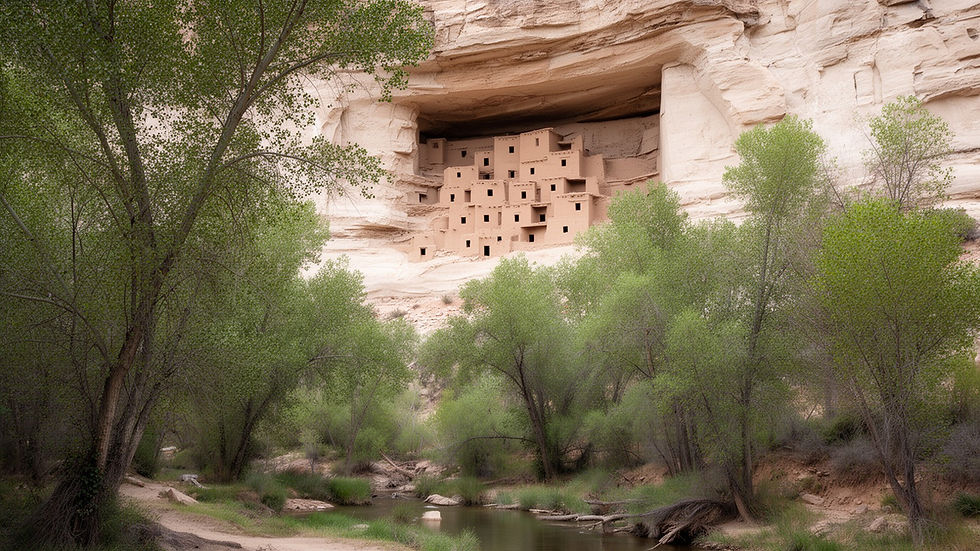
The things-to-do page describes a 0.3 mile loop, paved, wheelchair accessible, and mostly shaded. That matches the visit I want on a morning when my knees are already argued-out from the garden. You see the main dwelling, the one everyone photographs, and you can continue to Castle A, a larger site that burned in the late 1300s and reads as foundations and melted walls more than as a standing house. The spur toward Castle A is paved and steeper. I take it if the morning is still kind. I skip it if I came for one clear look and a bench.
Benches and shade sit along the loop, including in front of the dwelling. The sycamores and other creek trees do a lot of the cooling. The cliff does the rest. I stop talking when I get to the main view. It is not a long silence. It is just the point where the rooms stop looking like a picture and start looking like a place where people carried water up from the creek.
What there is to do, including the picnic area, is listed at https://www.nps.gov/moca/planyourvisit/things2do.htm
Rooms, Not a Rock Formation
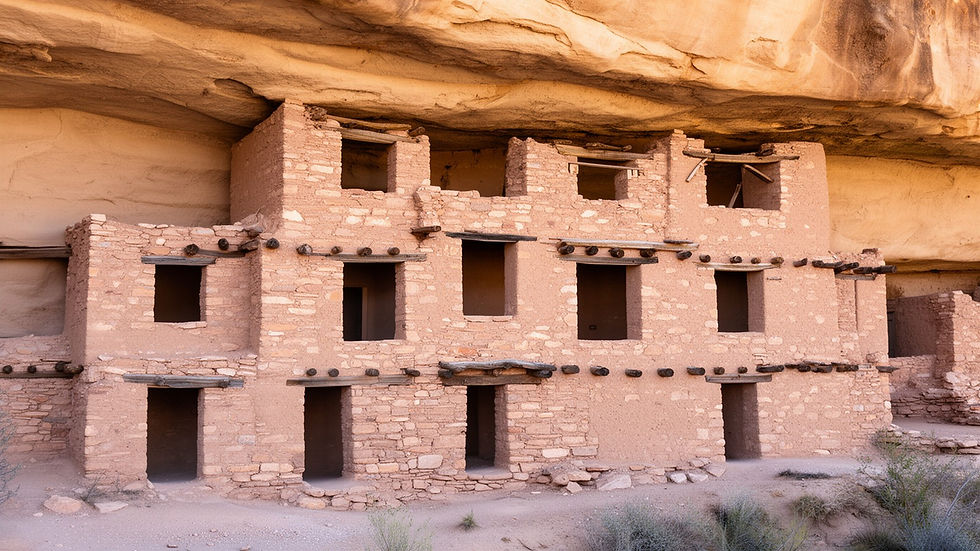
I say this plainly because Arizona has a lot of stone shapes, and this is not one of them. Montezuma Castle is masonry: stone and adobe walls, openings for doors and windows, timbers set into the courses, stories stacked in the alcove. The limestone is the shelter. The building is the story. Nobody hollowed a tunnel through the cliff for you to stroll. The trail stays on the valley floor.
You also do not go inside. NPS is clear that visitors see the dwelling from the outside. Tours into the rooms ended long ago, because feet and curiosity were wearing out the thing the monument exists to keep. A short film in the visitor center museum walks through a realistic look at the interior during operating hours. That is the inside view. The alcove is not a climbing gym, and the walls are not a photo prop to lean on. Stay on the pavement. The railing is there for a reason.
I like the museum stop after the walk, not before. The rooms make more sense once I have craned my neck at them. ## Castle A, the Creek, and the Picnic Table
Castle A is the humbling half of the loop. The main dwelling survived because of where it sits. Castle A did not. Standing there, I get why “preserved” is a condition, not a guarantee. Fire, weather, and time took a larger building down to traces. The one in the alcove is the rare case.
The picnic area is along the creek, which park pages call Beaver Creek. I use it if I packed food and the table is free. I do not plan a long lunch in summer. In October a short sit with a bottle of water feels like the right ending. Food stays attended. Ground squirrels along creek parks are not shy, and I am not interested in teaching them about sandwiches.
Montezuma Well Is a Different Stop
Montezuma Well is about 11 miles northeast, a separate piece of the same monument. It is a limestone sink with water that fed Sinagua ditches, and it has its own short trail and its own cliff houses, smaller and easier to miss if you only came for the famous alcove. Entrance there is free even when the Castle charges. I do not try to do both on a rushed morning unless someone in the car is still fresh. They are a twenty-minute drive apart, not a stroll. If I have one hour, I spend it at the Castle. If I have a morning with no garden waiting, the Well is the second stop and a different kind of quiet.
The visitor center at the Castle can answer questions for both places. Basic info for the pair lives on that same planning page above.
How I Actually Do the Morning
I check hours and any alert the night before. Monsoon season is over by October, but the park has closed trails after nearby lightning in summer, and I do not assume a clear forecast from my porch matches the cliff. I leave early enough to be at the gate at opening, not twenty minutes before with nowhere legal to wait. The gate timing is the constraint. Arriving at 4:30 p.m. for “a quick look” is how people get turned around.
I tell whoever is with me, before we pass the visitor center, that we are not going up. Kids hear “castle” and picture stairs. There are no stairs into those rooms. The adventure is the looking, the creek trees, and the film if the museum is open. That expectation saves a meltdown and saves the resource.
What I Do Not Invent
I do not describe the alcove as a natural bridge or a stone arch, even if a photo crops the cliff into a curve. The curve is an overhang above a building. Say that, and the place stays what it is.
I also do not treat the site as a backdrop for a garden metaphor and stop there. The Sinagua who built these rooms were farmers in a valley with a creek, which is a true connection to the way I think about water. It is not permission to be casual with the walls. My beds are for experiments. This cliff is not.
Comic Break: The View From the Trail
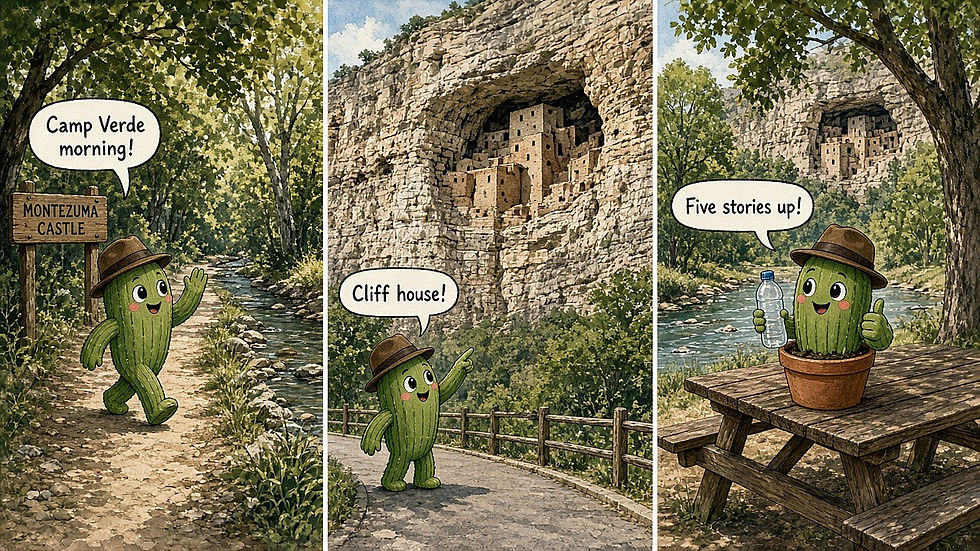
The strip gets the morning right. A walk in from the Camp Verde side, a stop on the path, and a point up at the rooms in the alcove. Not a hike into them. The last panel is the picnic table and a bottle of water, which is as far as the adventure needs to go. Five stories of other people’s work, seen from below, then the shade.
If You Only Have an Hour
Pay the pass or show the one you already carry. Use the restroom at the visitor center. Walk the paved loop to the main dwelling and read the signs instead of skimming them. Look at Castle A if the grade is fine for you. Watch the short film if it is running. Buy nothing you have to carry on a hot car seat. Picnic only if you already have food and time. Skip the Well until a day when the Castle is not the whole plan.
Then go home before the parking lot feels like noon. The best part of this monument, for me, is that it does not demand a long day. It demands attention for a short one.
Final Thoughts
Montezuma Castle is a Sinagua cliff dwelling in a limestone alcove above Wet Beaver Creek, near Camp Verde. About twenty rooms, about ninety feet up, built to stay dry when the water rose. You see it from a short paved trail. You leave it there. Check hours, fees, and alerts on the park’s pages before you lock the gate schedule in your head. I will keep going on cool mornings, hat on, water in the bag, no plan to climb anything but the gentle path.


Comments