


Growing Snap Peas in Arizona: Plant in October, Pick Sweet Pods All Winter

Every year around the first week of October, I walk out to the garden in the morning and notice it. The air is a little softer, the soil no longer burns my hand, and the summer stuff is limping along. That is my cue to plant snap peas. They are one of my favorite crops in the Arizona low desert, because they turn the coolest, quietest months of the year into a steady supply of sweet, crunchy pods you can eat right off the vine.
If you have never grown peas here, this is the year. They are easy, they do not need much fertilizer, and kids love picking them. Here is everything I do, from choosing varieties to building a trellis, watering, inoculating seed, harvesting, and cooking the pods.
Why October Is the Right Time for Peas in the Low Desert
Peas are a cool-season crop. They like daytime temperatures roughly in the 60s and 70s, and they get cranky once the thermometer climbs into the mid-80s. In Phoenix, Tucson, Yuma, and the rest of the low desert, that means our pea season runs from fall through early spring, the opposite of most seed catalogs.
I plant my first round in early to mid-October and keep planting small batches every few weeks through about December, sometimes into early January. October plantings usually start flowering around the holidays and keep producing through winter. Once we get a string of days in the upper 80s, usually sometime in March or April, the vines slow down, the pods get starchy, and the plants start to yellow.
The one thing to watch in October is heat. If we are still seeing 95-degree afternoons, I wait a week. Pea seed can rot in warm, wet soil, and seedlings that come up in a heat spike struggle. A soil temperature somewhere under about 80 degrees is a good target.
Up in Prescott or Flagstaff, peas are a late-winter and spring crop instead. This post is for low-desert gardeners.
Varieties That Do Well Here
Quick refresher: snap peas have thick, juicy pods you eat whole, snow peas are the flat stir-fry pods, and shelling peas are the ones you open for the peas inside. They all grow the same way. I lean toward varieties that are known for sweetness and some disease resistance, since powdery mildew is the main problem peas face in our dry winters. A few I like:
Sugar Snap is the classic. Tall vines, often five or six feet or more, with plump, sweet pods. It needs a real trellis, but it rewards you with a big harvest.
Sugar Ann is a compact bush-type snap pea, usually around two feet tall. It is great for containers or anyone who does not want a tall trellis.
Cascadia is a good mid-height option, around three feet, with improved disease resistance. Stringless types like Sugar Daddy save you from pulling strings before cooking.
Oregon Sugar Pod II is my go-to snow pea if you want some flat pods for stir-fry too.
I like to grow one tall variety on a trellis and one bush variety in a container so I can see which does better in a given year.
Getting the Bed Ready
Peas are not heavy feeders. In fact, too much nitrogen gives you huge leafy vines with fewer pods. What they do want is loose soil that drains well and holds some moisture.
Here is how I prep:
Pull out spent summer crops and their roots.
Work in two or three inches of good compost across the bed.
Loosen the soil about eight to ten inches deep with a fork.
Skip the high-nitrogen fertilizer. A light sprinkle of a balanced organic fertilizer is plenty if your soil is poor.
Water the bed deeply a day or two before planting so the soil is evenly damp, not soggy.
Pick a spot with full sun in winter. Morning sun is especially helpful, because it dries the leaves quickly and helps keep powdery mildew down.
Using Pea Inoculant (and Why It Helps)
Peas are legumes, and legumes have a neat trick. Their roots partner with specific soil bacteria, called rhizobia, that pull nitrogen from the air and turn it into a form the plant can use.
Desert soils, especially new beds or bagged soil, do not always have the right bacteria for peas. A garden inoculant is simply a powder that contains them. You moisten the seeds, roll them in the inoculant right before planting, and plant them. Make sure the package says it is for peas, because different legumes use different strains.
Is it required? No. Peas will grow without it. But in my experience inoculated peas look greener and produce better, especially in a bed that has never grown legumes before. It is cheap and takes about one minute. If you want to grab some, something like this works: https://www.amazon.com/s?k=pea+and+bean+inoculant&tag=greenthumbh0a-20 It is a live product, so keep it cool and check the date.
Planting Snap Peas
Peas go straight into the ground from seed. They do not like having their roots disturbed, so I never bother with transplants.
Plant seeds about one inch deep.
Space them about two inches apart along the row.
If you are planting both sides of a trellis, put a row on each side, about six inches from the support.
Water well after planting, then keep the soil evenly moist until sprouts appear.
Germination usually takes about a week to ten days, sometimes faster in warm soil. Birds and pill bugs love tender pea sprouts, so if you have trouble with either, a piece of row cover or bird netting laid over the bed for the first couple of weeks makes a huge difference.
For a steady harvest, I plant a new short row every two to three weeks from October into December. That way I am not drowning in peas one week and out the next.
Building a Trellis Peas Will Actually Climb
Peas climb with thin tendrils that wrap around anything skinny. They cannot grab a thick post or a smooth wooden stake. They need string, netting, wire, or twiggy branches.
Some easy options:
Cattle panel or hog wire bent into an arch or leaned against a fence. Strong, reusable, and the openings are perfect for tendrils.
Plastic or nylon trellis netting stretched between two T-posts or wood stakes. Cheap and light.
String trellis, with twine run up and down between a top bar and a bottom bar.
For tall varieties like Sugar Snap, plan for a trellis at least five or six feet tall. For Cascadia or other medium varieties, three or four feet works. Bush types like Sugar Ann can use a short ring of wire or just lean on each other, though a little support keeps pods off the ground.
Install the trellis before you plant or right at planting, so you do not damage roots later. When seedlings are a few inches tall, I gently guide them toward the support. After that, they usually figure it out on their own.
Watering Peas Through Winter
Peas want steady moisture, especially once they flower and start setting pods. Dry soil during flowering means fewer pods and tougher ones.
That said, our winter watering is much lighter than summer watering. Here is my general rhythm in the low desert:
After planting, keep the top inch of soil damp until sprouts appear. That may mean a light watering every day or two in warm October weather.
Once seedlings are up, water deeply less often. In fall, that might be every two to four days depending on heat and your soil.
In the cool of December and January, many weeks I only water once or twice, especially if we get a winter rain.
The best tool is your finger. Push it into the soil a couple of inches. If it is dry there, water. Drip lines or soaker hoses are ideal because they keep water off the leaves, which helps prevent powdery mildew. A light layer of straw or leaf mulch keeps the soil evenly moist and cool.
Frost, Mildew, and Other Problems
Pea plants handle light frost well. The leaves and vines usually shrug off a few chilly nights. Flowers and young pods are more tender, though, so on nights forecast to drop into the mid-to-high 20s, I throw frost cloth over the trellis. Remove it the next morning.
Powdery mildew shows up as a white, dusty coating on leaves, often late in the season. Good spacing, morning sun, watering at the soil, and resistant varieties help.
Aphids sometimes cluster on new growth. A strong spray of water knocks them off, and ladybugs usually show up to help.
When and How to Harvest Snap Peas
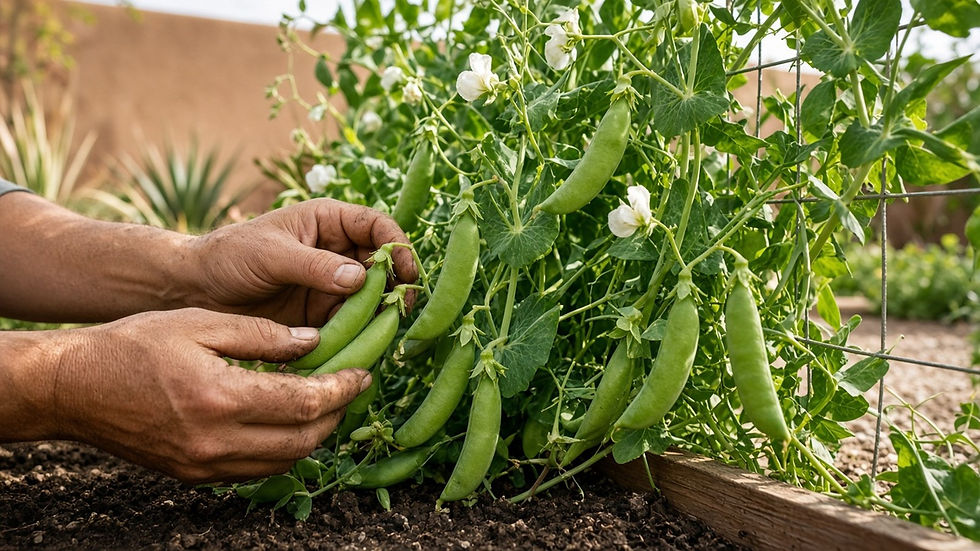
This is the fun part. Snap peas are ready when the pods are plump and round and you can see the peas inside starting to fill out, but the pod is still bright green and glossy. Most varieties start producing around two months after planting, sometimes a bit longer in short winter days.
A few tips:
Pick often. Every two or three days during peak season keeps the plants producing.
Use two hands. Hold the vine in one hand and snap or snip the pod with the other. Yanking can break the vines.
Taste as you go. If a pod has gone dull, starchy, or a little leathery, it waited too long. Pick it anyway so the plant keeps making new ones.
Harvest in the morning when pods are crispest.
Snap peas keep well in the fridge for several days in a bag or container, but they are sweetest the day you pick them. Sugar starts turning to starch soon after harvest.

Cooking and Eating Snap Peas
Half my harvest never makes it inside. If yours does, here are some favorites.
Raw. Pull off the string along the seam if your variety has one, then eat them plain or with hummus or ranch. They are great in lunch boxes.
Quick sauté. Heat a little olive oil or butter in a pan, add the pods, and toss for two or three minutes until bright green and still crisp. Finish with salt, garlic, and a squeeze of lemon.
Blanch and chill. Drop pods into boiling water for about one minute, then into ice water. They stay bright and crunchy for salads or snacking.
You can also freeze snap peas. Blanch them briefly, chill in ice water, dry them, and freeze in a single layer before bagging.
End of Season: Leave the Roots
When the heat finally ends the pea season in spring, I cut the vines at soil level and leave the roots in the ground. Those roots, with their nitrogen-fixing nodules, slowly break down and give the next crop a little boost. The vines go into the compost pile. Then the bed is ready for summer crops like peppers, squash, or melons.
Snap peas are one of those crops that make winter gardening in Arizona feel like cheating. While most of the country is putting the garden to bed, you get to stand outside in a sweatshirt eating fresh peas off the vine. Get some seed in the ground this month and let me know how your harvest turns out.


Comments